.png?width=191&height=191&name=Lizzie%E2%80%99s%20(1).png "Lizzie’s (1)")
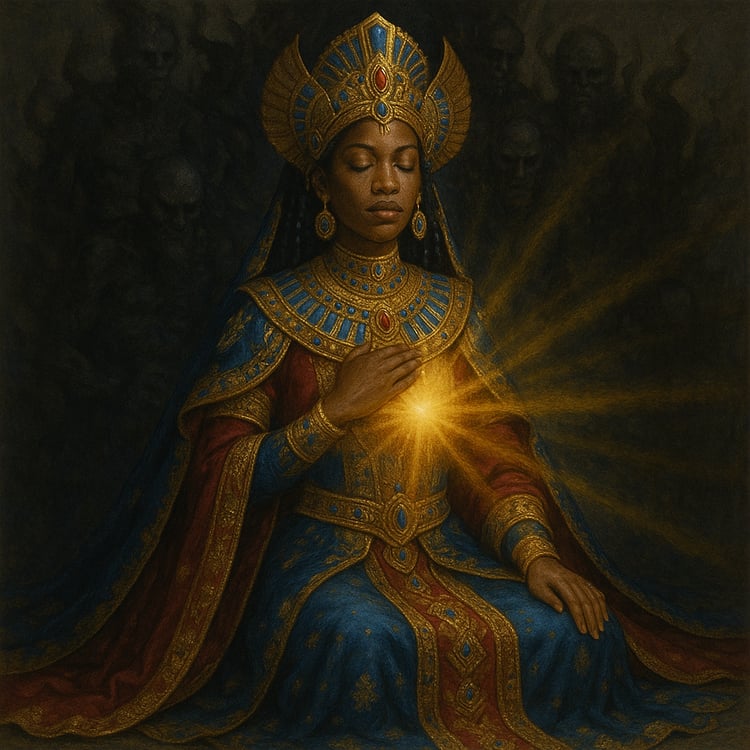
Discover how the Christos Archetype offers a transformative approach to trauma recovery and identity reconstruction for first responders and mental health professionals.
Understanding the Christos Archetype: Foundations for Healing
The Christos Archetype, rooted in Carl Jung's work on archetypes, represents a profound internal structure that supports holistic healing. This archetype is conceptualized as an internalized capacity for self-regulation, ethical discernment, reflective functioning, and compassionate self-witnessing. In the context of trauma recovery, especially for African American individuals experiencing intergenerational trauma and systemic oppression, the Christos Archetype provides a psychological anchor for rebuilding a coherent sense of self.
By integrating principles from dialectical behavior therapy (DBT), attachment theory, and trauma-informed practice, the Christos Archetype emerges as a dynamic process rather than a fixed identity. It focuses on developing adaptive consciousness through conscious integration of emotional, cognitive, and spiritual domains, supporting first responders and mental health professionals in guiding clients toward sustainable healing.
Integrating Spirituality and Psychology in Trauma Recovery
Traditional approaches to trauma recovery have often separated spirituality from clinical practice. However, the Christos Archetype bridges this gap, illustrating how spiritual symbolism can coexist with evidence-based mental health models. For first responders and mental health professionals, understanding this integration is essential for offering culturally competent and effective care to clients navigating complex trauma histories.
The Christos Archetype is not about indoctrination but about fostering an adaptive consciousness—a sense of wholeness that is both spiritual and psychologically grounded. This framework empowers individuals to reclaim cultural and spiritual resources, supporting resilience and posttraumatic growth, particularly in marginalized communities.
Reconstructing Identity After Trauma: The Christos Perspective
Trauma often fragments identity, leaving survivors feeling disconnected from themselves and their communities. The Christos Archetype offers a roadmap for reconstructing a coherent adult self capable of navigating stress without reverting to survival-based reactivity. Through reflective functioning, self-regulation, and compassionate self-witnessing—skills emphasized in DBT and attachment-focused therapies—survivors can cultivate a stable sense of self anchored in ethical discernment and cultural identity.
For African American individuals, this process also involves reclaiming cultural narratives that have been suppressed or distorted by systemic oppression. The Christos Archetype supports the creation of a personal and collective story that honors resilience, agency, and spiritual heritage, fostering true psychological wholeness.
Practical Applications for First Responders and Mental Health Professionals
First responders and mental health professionals are uniquely positioned to facilitate the emergence of the Christos Archetype in trauma survivors. By integrating trauma-informed practice with an awareness of spiritual and cultural dynamics, practitioners can create safe environments for clients to explore and rebuild their identities.
Practical interventions include facilitating reflective dialogue, teaching emotional regulation skills, and encouraging ethical decision-making. These approaches, grounded in evidence-based models like DBT and attachment theory, help clients internalize the Christos Archetype as a source of strength and guidance in their healing journey.
Building Resilience and Empowerment Through Integrative Approaches
The Christos Archetype is ultimately a model of resilience and empowerment. By embracing an integrative approach that acknowledges the interplay between trauma, identity, and spirituality, first responders and mental health practitioners can support clients in moving beyond survival toward thriving.
For African American communities and other groups impacted by collective trauma, this approach provides a framework for cultural reclamation and psychological integration. The Christos Archetype stands as both a symbol and a structure for healing, guiding individuals toward wholeness and empowering them to meet life’s challenges with wisdom, compassion, and self-mastery.